
Magazine Archive
Home -> Magazines -> Issues -> Articles in this issue -> View
Fender Jaguar/Jazzmaster | |
six stringsArticle from Making Music, May 1986 | |
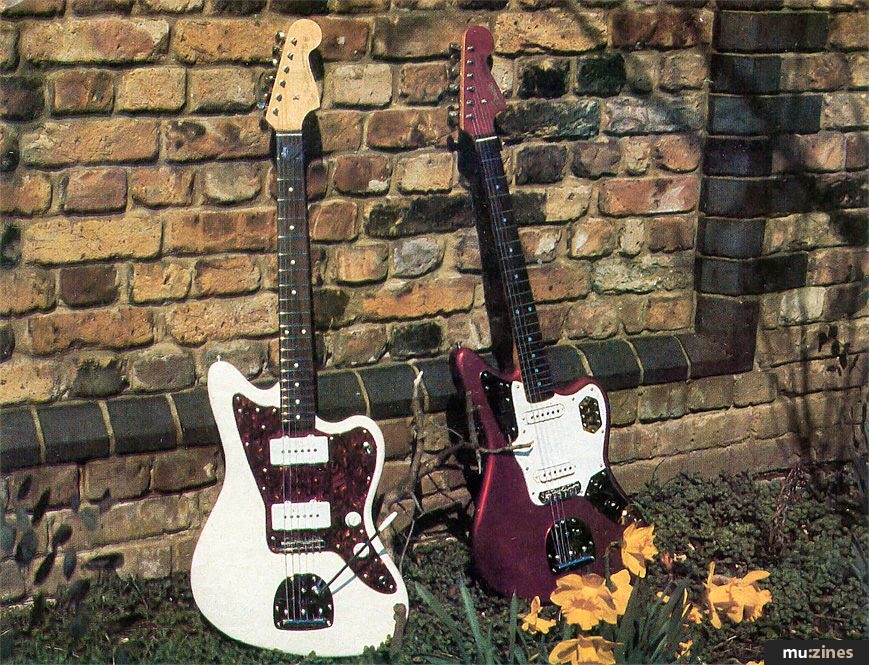
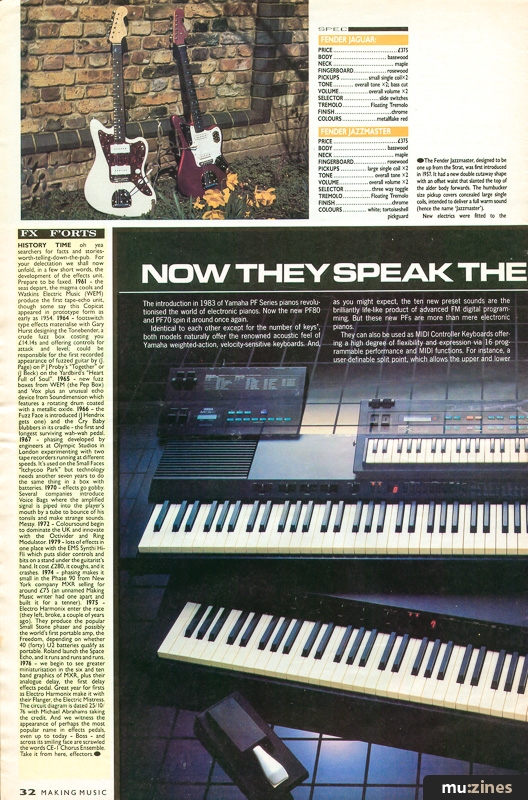
FENDER JAGUAR
- PRICE £375
- BODY basswood
- NECK maple
- FINGERBOARD rosewood
- PICKUPS small single coil x2
- TONE overall tone x2; bass cut
- VOLUME overall volume x2
- SELECTOR slide switches
- TREMOLO Floating Tremolo
- FINISH chrome
- COLOURS metalflake red
FENDER JAZZMASTER
- PRICE £375
- BODY basswood
- NECK maple
- FINGERBOARD rosewood
- PICKUPS large single coil x2
- TONE overall tone x2
- VOLUME overall volume x2
- SELECTOR three way toggle
- TREMOLO Floating Tremolo
- FINISH chrome
- COLOURS white; tortoiseshell pickguard
The Fender Jazzmaster, designed to be one up from the Strat, was first introduced in 1957. It had a new double cutaway shape with an offset waist that slanted the top of the alder body forwards. The humbucker size pickup covers concealed large single coils, intended to deliver a full warm sound (hence the name 'Jazzmaster').
New electrics were fitted to the Jazzmaster, giving two independent tone systems. The straightforward three-way selector, volume, and tone controls were supplemented by an additional 'rhythm' circuit, with its own volume and tone roller knobs mounted above the front pickup on the handsome tortoiseshell scratchplate. The rhythm circuit gives front pickup only, with a softer tone than the normal setting.
The maple neck had a 25in scale, but only 21 low thin frets on its wide rosewood fingerboard, theoretically giving space to master jazz in. A new light touch 'Floating Tremolo' with an innovative locking system (intended to fix the bridge in the event of a string breaking) completed the make-up of this all-new Fender.
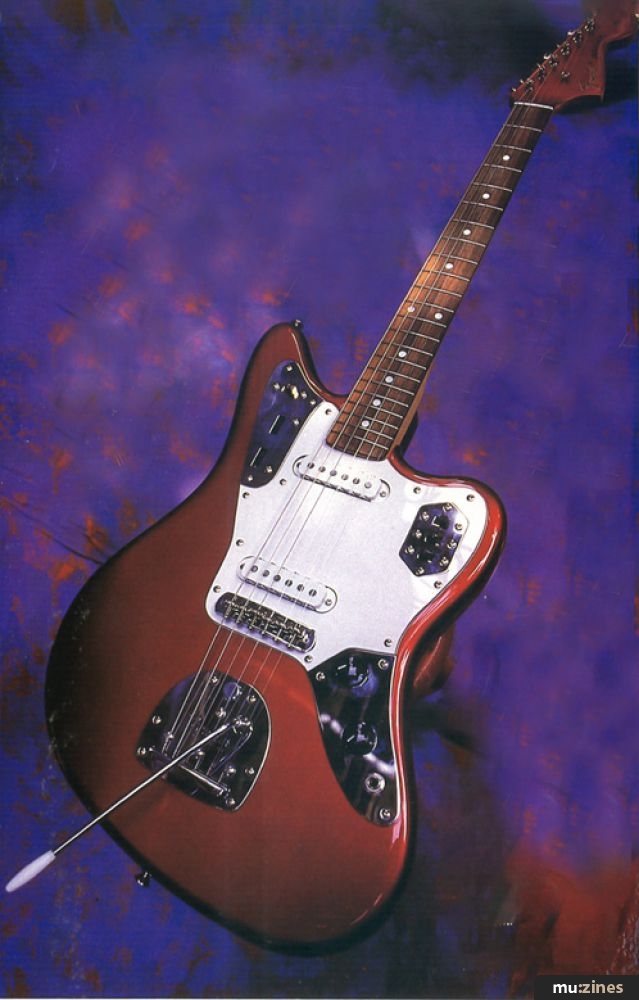
The Jaguar appeared in Fender catalogues in 1961, and has been described as a souped-up Jazzmaster. It had the same semi-trapezoid body, tremolo, and dual circuit tone system, but was changed in a number of other ways: pickup selection was now by two on/off slide switches, accompanied by a third which acted as a bass cut. The pickguard became four part, being tarted up by the addition of chrome plates under all the controls, and the pickups themselves were narrower but deeper single coils, intended to give a cleaner, punchier sound than the Jazzmaster.
The Jaguar had a shorter (24in scale) neck with 22 frets, and the option of a matching coloured finish to the headstock. The final 'improvement' was a Gretsch style flip-up foam rubber mute.
Both guitars reached their peak of popularity in the early 1960s, when they became associated with top combos like The Ventures, and surf music in general. The Jaguar was discontinued in 1974, while the Jazzmaster remained available until the late 70s (does anyone know a specific date?), which must have been when Elvis Costello bought his.
OPINION
Two beautiful new vintage Fenders recreated from the original specifications, and accurate in almost every detail: the Jaguar is a pre-1966 model, and the Jazzmaster seems to be 1964-5. The only error I spotted was the missing mute on the Jaguar.
In spite of their weight, both guitars are a snug and comfortable fit. They have substantial necks with wide flat fingerboards, which feels fine on the Jazzmaster, but slightly uncomfortable and out of proportion on the smaller scale Jaguar.
Their controls are easy to use, though guitar styles have changed enough today to render the dual tone circuitry virtually redundant. Still, it could be thought of as a forerunner of guitars with memories (cf Vigier), if you were feeling particularly imaginative.
The big pickups on the Jazzmaster are very loud and full - not as rich as a Gibson, nor as penetrating as a Strat, but still with character. The Jaguar is quieter but harder sounding, bright and jangly, and less mushy on chords than the Jazzmaster. With the bass cut on, the back pick up gives an authentic biting 60s punk rhythm tone, right down to the bottom E going sharp when hit hard.
DECISION
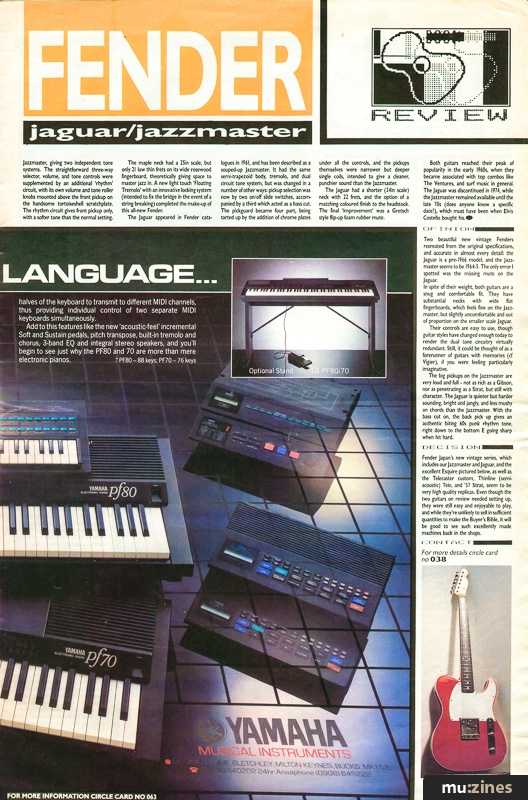
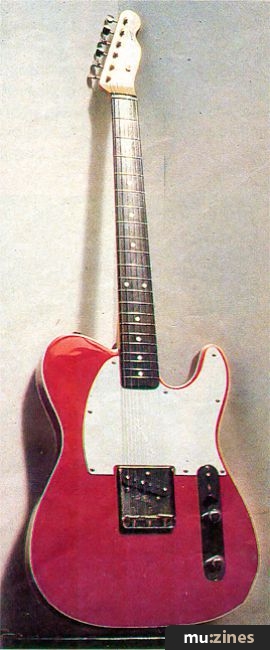
Fender Japan's new vintage series, which includes our Jazzmaster and Jaguar, and the excellent Esquire pictured below, as well as the Telecaster custom, Thinline (semi-acoustic) Tele, and '57 Strat, seem to be very high quality replicas. Even though the two guitars on review needed setting up, they were still easy and enjoyable to play, and while they're unlikely to sell in sufficient quantities to make the Buyer's Bible, it will be good to see such excellently made machines back in the shops.
Also featuring gear in this article

Fender Jaguar
(12T Sep 86)
Fender Jaguar - GuitarCheck
(IM Oct 86)

Guitar Check
(IM Jun 75)
Browse category: Guitar > Fender
Publisher: Making Music - Track Record Publishing Ltd, Nexus Media Ltd.
The current copyright owner/s of this content may differ from the originally published copyright notice.
More details on copyright ownership...

Making Music - May 1986
Review
Help Support The Things You Love
mu:zines is the result of thousands of hours of effort, and will require many thousands more going forward to reach our goals of getting all this content online.
If you value this resource, you can support this project - it really helps!
Donations for June 2026
Issues donated this month: 0
New issues that have been donated or scanned for us this month.
Funds donated this month: £0.00
All donations and support are gratefully appreciated - thank you.
Magazines Needed - Can You Help?
Do you have any of these magazine issues?
If so, and you can donate, lend or scan them to help complete our archive, please get in touch via the Contribute page - thanks!
Please Contribute to mu:zines by supplying magazines, scanning or donating funds. Thanks!
Monetary donations go towards site running costs, and the occasional coffee for me if there's anything left over!

 @mu_zines
 RSS Feed
 Blog
Blog